Sunday, May 3, 2009

Session 4

I have been busy reading the articles and trying to figure out how to connect the parts. Honestly I am still battling the web-based instruction and virtual reality sections as part 2 and 4 of my lit review. I have found articles to support VR but I if I focus on it as the next generation, it works. I have been so busy reading my articles that I have not been able to read every one else's blogs but I will read the other blogs tomorrow.

Here are the five questions Dr. Newberry asked us to focus on:
1. What are your three major areas of review? My Three areas of review focus around assessment of students and teachers on IT Skills, utilizing web based instruction for classes, using Virtual Reality for schools using Second Life or Moodle---It’s more of the next generation of schools
2. How does each area of your review inform and/or influence your project?
The first area focuses on assessment. I have found that my students do not have basic IT skills that are needed to create a truly web-based student. The students are spending too much time trying to figure out how to use the computer instead of utilizing the tools needed for studies. How can students use the computer for classes if they can’t turn it on.
The second area focused on the web-based instruction that is currently being used. The main problem with most of the web-based classes is that they are impersonal and lack the interaction needed for students. We have moved onto using podcasts, videos and blogs but there is still something missing.
The third area is the future of education. Programs like Moodle and Blackboard allow for more interaction but students are still missing something. Currently programmers are working to create an interactive classroom that utilizes Moodle and Second Life to create an interactive classroom with avatars, chats and blogging.
3. What are the subsections in each of your three major areas? Not sure yet—still reading articles and trying to put the pieces together.
4. Do these subsections make sense? Not sure yet—still reading articles and trying to put the pieces together.
5. Does your outline flow? Still in progress

Sunday, April 26, 2009

my pre-thesis revised as of 4/26

I did make some changes to the lit review articles and my plan after a week to look at other articles and see that I wanted to make some changes.


Introduction:
After 3 years of running the computer lab, I see students growing in the skills that will help them in creating multimedia projects and gaming but they do not know how to utilize the computer to create projects that require research and an advanced use of computers. They can tell you how to add backgrounds to myspace or what is the best video from Youtube but, students don’t know what they don’t know. I am looking at how to assess student skills and adjust my program to meet the National Education Technology Standards (NETS) and No Child Left Behind (NCLB). I am currently assessing the students using an assessment of the NETS from Simple Assessment (http://www.simpleassessment.com ). The assessment asks 60 questions based on the 6 areas of NETS. The teacher gets feedback from the report and is able to tailor a program to help the students become proficient in the standard. The questions are either true/false, multiple choice, matching on the different skills needed.
After reviewing what standards that need to be met, I will complete a review of our program to make sure that we are covering the standards for our students and revising the classes to met NCLB.
Preliminary Literature Review:
Sieber, Vivien. (2009). Diagnostic online assessment of basic IT skills in 1st year undergraduates in the Medical Sciences Division, University of Oxford. British Journal of Educational Technology, 40(2) 2009 215-226. Doi:10.1111/j.1467-8535.2008.00926x. Retrieved April 19, 2009 from Academic Search Premier.
This study tested 1st year undergraduates on their basic IT Skills. The researchers were analyzing the level of competence of the undergraduates in the areas of word processing, spreadsheets, databases, email and writing web pages. They used an online assessment that was a mixture of multiple-choice, true-false, and drag and drop questions. The researchers found that many students had overstated their technical competence and were not capable to use programs that were cross platform. For example, the students were not able to use word processing programs in Windows, Mac and Linux with ease even though the researchers thought it would have been an easy transference. Students did not know how to use the software properly and were not aware of advanced functions that they should have known. The students tested poorly in databases because they did not use them regularly. The students when interviewed stated that they learned most of their new skills by working with friends that knew how to do the skill. The researchers concluded that many students did not have the basic skills for effectively use the computers and there needed to be a program in place to aid the students so that the students could use the programs effectively instead of trial and error.
Fang-Ying Yang. (2008, 13 December). Examining high-school student’s performance toward learning environments, personal beliefs and concept learning in web-based contexts. Computers and Education 52(2009) 848-857. Retrieved April 19, 2009 from Academic Search Premier.
The author was researching how high school students felt about web-based instruction. A questionnaire was used that investigated how the students felt about web-based instruction based on the instructional approach, cognitive process and interaction system. The results of the questionnaire said that the students preferred to work individually instead of working in a collaborative group for projects. They wanted interaction with experts with the expertise needed instead of with their peers. Inquiry-based instruction was preferred with a clear task and it needed to be known what was expected. Since the students responded negatively to a collaborative model, the teachers had to adjust to show that the positive aspects of using web-based instruction with collaboration with peers to complete tasks. They had to plan online chats that were carefully planned and guided. This project showed the limitations of web-based instruction as far as limiting interaction between peers
Omale, Hung, Luetkehans, Cooke-Plagwitz. (2009) Learning in 3D multiuser virtual environments: Exploring the use of unique 3D attributes for online problem-based learning. British Journal of Educational Technology, 40(3) 2009 480-495. Doi:10.1111/j.1467-8535.2008.00941x. Retrieved April 19, 2009 from Academic Search Premier.
This research project looked at using 3D technology and virtual worlds to interact more with each other than a standard web-based class. The researchers focused on three different elements (cognitive, social and teaching presence) and how the elements related to using a 3D World. The researchers used ActiveWorlds because they wanted something that was visually appealing, animated and interactive. There were 8 students who were used to rest to see how objects such as avatars, 3-D space and bubble dialogue affect the three elements. All of the students knew each other to avoid the time that would have been spent trying to get to know each other. The students were instructed on how to use ActiveWorlds and then observed the students. The students would be sent to different meeting rooms and discuss the assigned case. The researchers then used the transcripts form the sessions to look to see how the students were utilizing the program. Based on the research, the researchers came to three conclusions. Number one was the virtual world was fun and engaging and they liked the avatars. Number two was it helped with negotiation, clarification and brainstorming but it had some limitations based on the technology. Number three was that the bubble dialogue allowed for reflection that was insightful but it also found that the students were careful with their wording because the words could be connected to the avatar of the person. The research showed that this was a good way to connect the distance learners together but it also needed to have a more structured design such as web-based instruction. One option would be a combination of Moodle and Second Life that is apparently in the works.


Analysis Plan:
1. After beginning to review the literature I see that I will need to develop a program that will help instruct the students while keeping the students engaged.
2. I will have students take pre-assessment using Simple Assessment NETS standard test.
3. I will review the results to see what standards the students are having difficulty with.

Design Plan:
1. As I review the results from the NETS pre-assessment, I will create a list of standards that I need to work on.
2. I will also look at the projects and modules that I have in my class to match up the NETS standards to what is being taught. I am hoping that I am covering all of the standards through the projects and modules but know I need to adjust them.
3. After reviewing the Modules and projects and checking for alignment of NETS, I will look to see what standards still need to be met.
4. For the standards that are not currently aligned, I will either adjust my projects and modules to meet them or will create lessons to meet the standards. Simple Assessment has a component set up that covers the standards and creates 12 minute lessons with assessment of the lesson built into it. I am not sure if I want to use something like that or create my own.
5. If I do not use Simple Assessment, I will create my own lessons to cover the standards. I will create web-based assignments that will instruct the students on what is expected in each standard using web pages, video and podcasts packaged together to help reach the students in different modalities. I will then assess them to see if they understand the standard using either Simple Assessment or a hot potato quiz.
6. At the end of the Trimester, the students will take the post-test to gauge what they have learned and how they are rated for NETs and NCLB.
7. I am also talking to Simple Assessment about how to assess teachers to the NET-T.
Testing Plan:
1. After creating the lessons and evaluating my program, I will test the revisions with the classes in the Second Trimester. I will test the full program with ONE period while keeping the other classes with the old program.
2. I will assess all of the classes with the pre and post assessment but only the one class will receive the extra instruction on the standards.
3. I am wondering if it might be possible to test the students using one of the different ways to see what works best. Such as one class only seeing the web pages, one class having the podcasts and one class only video to test to see which one is the most effective.
4. I will have the test class give me feedback on the lessons and revise the lessons as needed. If I do #3, then I would have all of the different groups
Implementation Plan:
1. After testing the lessons with one class and revising it, I will use the full program with all of my classes. I will assess with the Pre and Post Tests. I will use the lessons to assist the students in understanding what the objectives of the standards.
2. I will evaluate the program at the end of the trimester and revise as needed.

This week’s activity log:
Thursday April 16—downloaded Thesis Template, Power Point, Template Development and added blog list to my site. I also worked on first part of pre-thesis.
Sunday April 19—Worked on Pre-thesis, logged into Plau Library to search for and download articles for Lit review. I updated my blog list and blog. I visited 7 blogs and worked on plan.
Monday April 20—Downloaded Week 3 podcasts and documents
Week 3
Tuesday April 21—began reading articles for lit review that I downloaded from Plau Library. I was focusing on web-based instruction and started looking at virtual worlds and schools.
Friday April 24—I spent some more time researching virtual schools. There were some articles about using Second Life and Active Worlds that caught my attention. I liked the idea of combining Second Life and Moodle for a class model.
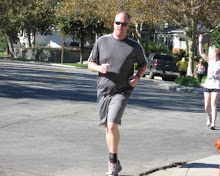
Sunday April 26—while recovering from 19.5 miles of training for the LA Marathon, I reworked my pre-thesis based on a more through reading of articles for literature review. You will notice that I changed 2 of my articles.

Thursday, April 23, 2009

Quick question about lit review

Hi all,
I am in the process of reworking the pri-thesis lit review because I am not clearer about what is expected. I am wondering if this will work.

Assessment Online
Web-based instruction
Virtual Reality (Virtual Schools)

My dilemma is whether web-based instruction and virtual reality are the same things? I have gone back and forth and keep second guessing myself.

What do you think?

Sunday, April 19, 2009

Pre-Thesis (completed??)

Introduction:
After 3 years of running the computer lab, I see students growing in the skills that will help them in creating multimedia projects and gaming but they do not know how to utilize the computer to create projects that require research and an advanced use of computers. They can tell you how to add backgrounds to myspace or what is the best video from Youtube but, students don’t know what they don’t know. I am looking at how to assess student skills and adjust my program to meet the National Education Technology Standards (NETS) and No Child Left Behind (NCLB). I am currently assessing the students using an assessment of the NETS from Simple Assessment (http://www.simpleassessment.com ). The assessment asks 60 questions based on the 6 areas of NETS. The teacher gets feedback from the report and is able to tailor a program to help the students become proficient in the standard. The questions are either true/false, multiple choice, matching on the different skills needed.
After reviewing what standards that need to be met, I will complete a review of our program to make sure that we are covering the standards for our students and revising the classes to met NCLB.
Preliminary Literature Review:
Lee, Myung-Guen. (2000, 3 April). Profiling students’ adaption styles in web-based learning. Computers and Education 36(2001) 121-132. Retrieved April 19, 2009 from Academic Search Premier.
The author was looking at how students at a university in Seoul Korea learned using a web based program. The author identified 4 different learning styles and gauged how they reacted to the class online. The conclusion was that people learned differently and that one universal program would not benefit everyone. This study was seen as a starting block for the university to revise and develop more web based classes.
Marriott, Pru. (2009) Students’ evaluation of the use of online summative assessment on an undergraduate financial accounting module. British Journal of Educational Technology, 40(2) 2009 237-252. Doi:10.1111/j.1467-8535.2008.00924x. Retrieved April 19, 2009 from Academic Search Premier.
Students were assessed online while they took the accounting module. The researchers found that the students responded positively to the feedback that was given to them while they were assessed. They found that the students were excited about using the technology and it motivated them more than just using paper.
Sieber, Vivien. (2009). Diagnostic online assessment of basic IT skills in 1st year undergraduates in the Medical Sciences Division, University of Oxford. British Journal of Educational Technology, 40(2) 2009 215-226. Doi:10.1111/j.1467-8535.2008.00926x. Retrieved April 19, 2009 from Academic Search Premier.
This study tested 1st year undergraduates on their basic IT Skills. The study found that students with more IT skills were better at typing and using the computers that someone that hadn’t used them before.


Analysis Plan:
1. I will have students take pre-assessment using Simple Assessment NETS standard test.
2. I will review the results to see what standards the students are having difficulty with.

Design Plan:
1. As I review the results from the NETS pre-assessment, I will create a list of standards that I need to work on.
2. I will also look at the projects and modules that I have in my class to match up the NETS standards to what is being taught. I am hoping that I am covering all of the standards through the projects and modules but know I need to adjust them.
3. After reviewing the Modules and projects and checking for alignment of NETS, I will look to see what standards still need to be met.
4. For the standards that are not currently aligned, I will either adjust my projects and modules to meet them or will create lessons to meet the standards. Simple Assessment has a component set up that covers the standards and creates 12 minute lessons with assessment of the lesson built into it. I am not sure if I want to use something like that or create my own.
5. If I do not use Simple Assessment, I will create my own lessons to cover the standards.
6. At the end of the Trimester, the students will take the post-test to gauge what they have learned and how they are rated for NETs and NCLB.
7. I am also talking to Simple Assessment about how to assess teachers to the NET-T.
Testing Plan:
1. After creating the lessons and evaluating my program, I will test the revisions with the classes in the Second Trimester. I will test the full program with ONE period while keeping the other classes with the old program.
2. I will assess all of the classes with the pre and post assessment but only the one class will receive the extra instruction on the standards.
3. I will have the test class give me feedback on the lessons and revise the lessons as needed.
Implementation Plan:
1. After testing the lessons with one class and revising it, I will use the full program with all of my classes. I will assess with the Pre and Post Tests. I will use the lessons to assist the students in understanding what the objectives of the standards.
2. I will evaluate the program at the end of the trimester and revise as needed.

This week’s activity log:
Thursday April 16—downloaded Thesis Template, Power Point, Template Development and added blog list to my site. I also worked on first part of pre-thesis.
Sunday April 19—Worked on Pre-thesis, logged into Plau Library to search for and download articles for Lit review. I updated my blog list and blog. I visited 7 blogs and worked on plan.

Pre-Thesis (so far)

Ten years ago when I was in the ETEC program I noticed that many of my students did not have the skills needed to use the computer. They did not have a basic understanding of how to utilize computers as a tool to produce work. It is amazing to me that things have not changed. Ten years ago, my school was switching from the old Macs to our first Dells using Windows 95. Students were learning how to use an operating system and new software. I was looking for a way to help my students learn the basic skills and use computers to create projects using Hyperstudio. We didn’t even have the Internet until after I left. As part of my ETEC 609 class, my partner and I created a pre and post test assessing the student’s ability to navigate around the computer and open and utilize the programs that came with the computer. We found that the students were eager to learn the new computers and begin to understand the new software.
Today ten years later, I still see some of the basic needs. We have students that can navigate around Youtube and Myspace with no difficulty but can not understand how to utilize the computers as a tool to create projects and filter information. Three years ago, I took over one of the two computer classes on my campus and started reviewing the program that was in place. The other computer lab is set up to teach the students basic skills needed using Microsoft Word, Power Point and Adobe Photoshop. My class focuses on creating projects that tie in with the curriculum. Students use several programs to create multimedia projects to share the information.
That brings us to today. After 3 years of running the computer lab, I see students growing in the skills that will help them in creating multimedia projects and gaming but they do not know how to utilize the computer to create projects that require research and an advanced use of computers. Students don’t know what they don’t know. I am looking at how to assess student skills and adjust my program to meet the National Education Technology Standards (NETS) and No Child Left Behind (NCLB). I am currently assessing the students using an assessment of the NETS from Simple Assessment (http://www.simpleassessment.com ). The assessment asks 60 questions based on the 6 areas of NETS. The teacher gets feedback from the report and is able to tailor a program to help the students become proficient in the standard. The questions are either true/false, multiple choice, matching on the different skills needed.
After reviewing what standards that need to be met, I will complete a review of our program to make sure that we are covering the standards for our students and revising the classes to met NCLB.

Sunday, April 12, 2009

Timeline

This is my tentative timeline to complete the program:
Fall 1998-Winter 2000-- I took all of the classes in the ETEC program. I then lost steam and focus to finish the project and stopped.
Late March 2009-- I spoke to Dr. Leh about coming back to the program and interviewed to see how I could finish my Masters.
April 6, 2009--registered for class and began the class.
April 26, 2009--Pre-Thesis
May 10, 2009--Literature Review
May 24, 2009--Proposal
May 31, 2009--IRB
June 14, 2009--Project
??--Prototype
??--Final Draft
??--First and Second Readers
??--Format Review
June 2009--complete ETEC 542 and 644
Fall 2009--take 2 classes and COMPS

Hello

Hello everyone,
Let me introduce myself. My name is Chris Fisher and I am returning to the program after stopping back in Winter 2000. I had lost my focus after completing all of my classes but not finishing the project. About a month ago, I spoke to Dr. Leh about some paperwork and she explained that I could come back and take the comps. So here I am.

I am currently taking ETEC 542 and this class to prepare for the comps. I will take 2 classes and comps this fall. If all goes according to plan.

I am also training for the LA Marathon in May. I have been training since October. It has been very rewarding and I never knew I had it in me.

I am a Middle School computer teacher in Fontana. I run the technology core lab which is a project-based class. I enjoy the challenges.